- All Drug Categories
- Home
- Anti-cancer Drugs
- Healthcare Products
- Medical Information
- Statement
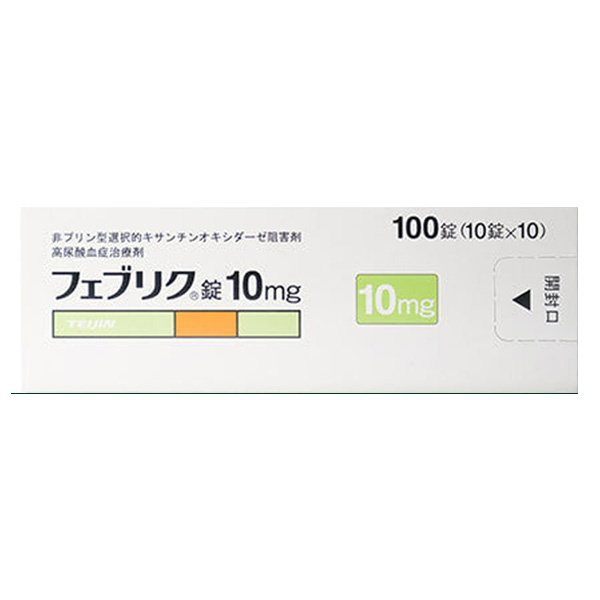
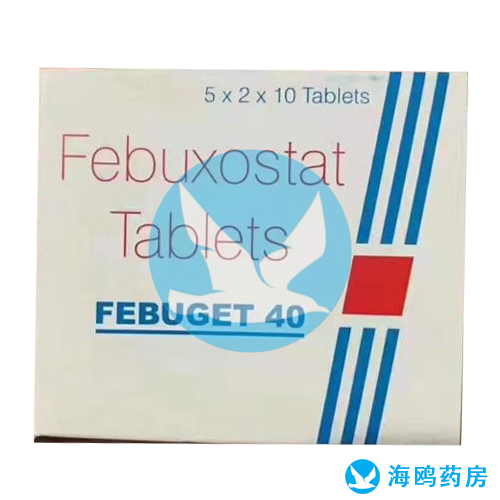
All Names: Febuxostat、Feburic、ULORIC、フェブキソスタット、非布司他片、非布索坦、福避痛
Indications:Suitable for patients with gout, hyperuricemia, and those who experience hyperuricemia during cancer chemotherapy.
Manufacturer:TEIJIN, Japan
Customs Clearance Procedure:If the customs requires the package for customs clearance, please pay the customs clearance fee according to the content of EMS SMS and customs regulations.
Febuxostat is a novel non purine xanthine oxidase inhibitor primarily used for the long-term management of hyperuricemia in gout patients. This drug was developed by Teijin Pharmaceutical in Japan.
1、 Drug name
Common name: Febuxostat
Product Name: Non Butastatin OD Tablets "NPI" (available in three sizes: 10mg, 20mg, and 40mg)
English name: Febuxostat ODTablets "NPI"
2、 Indications
Gout and hyperuricemia.
Hyperuricemia associated with cancer chemotherapy.
3、 Specifications and characteristics
Specification: There are three oral disintegrating tablet specifications, each containing 10mg, 20mg, and 40mg of active ingredients.
Characteristic:
Appearance: All specifications are white to slightly yellow plain flakes.
identification:
10mg: One side of the tablet is engraved with the words' Fyェペキソ OD10NPI '.
20mg: tablets with crossed lines, with one side engraved with the words "Fyェプキソ OD20NPI/NPI20 Fyェプキソ OD".
40mg: tablets with crossed lines, with one side engraved with the words "Fyェプキソ OD40NPI/NPI40 Fyェプキソ OD".
Physical parameters: 10mg tablet diameter of approximately 6.0mm; 20mg tablet diameter of approximately 7.0mm; 40mg tablet diameter of approximately 9.0mm.
4、 Main components
Active ingredient: Each tablet contains a labeled amount of Febuxostat.
Main excipients (additives): D-mannitol, cross-linked polyvinylpyrrolidone, light anhydrous silicic acid, sodium chloride, hydroxypropyl cellulose, etc. The three specifications of excipients have the same composition.
5、 Usage and dosage
For gout/hyperuricemia: The initial dose for adults is usually 10mg once daily, taken orally. Afterwards, the dosage should be gradually increased according to the blood uric acid level, and the general maintenance dose is 40mg once a day. The dosage can be adjusted according to the patient's condition, but the maximum daily dosage should not exceed 60mg.
For hyperuricemia associated with cancer chemotherapy: The usual adult dose is 60mg once daily, taken orally.
Medication should be taken 1-2 days before the start of chemotherapy.
At least 5 days after the start of chemotherapy, clinical symptoms and blood uric acid levels should be monitored for medication, and the medication time can be extended according to the situation.
6、 Dose adjustment (attention to usage and dosage)
For gout/hyperuricemia: In order to reduce the risk of gout attacks caused by a rapid decrease in uric acid levels during the early stages of treatment, the dosage should be gradually increased. It is recommended to start at 10mg per day, increase to 20mg per day after 2 weeks of medication, and increase to 40mg per day after 6 weeks of medication. After the increase, the patient's condition should be closely monitored.
If there is already a gout attack before starting medication, wait until the symptoms subside before starting medication. If gout attacks occur during medication, medication should be continued without changing the dosage of this product, and treatment with colchicine, nonsteroidal anti-inflammatory drugs, etc. should be considered based on symptoms.
Monitoring basis for dose adjustment: All dose adjustments should be based on regularly monitored blood uric acid levels.
7、 Medication precautions
Usage: This product is an orally disintegrating tablet that can be placed on the tongue and swallowed after saliva moistens and disintegrates (no water required); It can also be served by water delivery.
Before and after meals: Food can affect drug absorption. Compared to taking medication on an empty stomach, taking medication after meals reduces the maximum blood drug concentration and total exposure by approximately 28% and 18%, respectively.
Missed dose: In general, if missed dose is found and it is close to the next medication time, it should not be taken again, and the next dose should be taken according to the original plan. Specific advice should be sought from a doctor or pharmacist.
Vomiting: If vomiting occurs shortly after taking medication, it is recommended to consult a doctor or pharmacist to determine if additional medication is needed.
Attention:
Tablets should be taken out of the aluminum-plastic (PTP) packaging to prevent accidental ingestion and esophageal injury.
Do not take without water while lying down to avoid the risk of accidental inhalation.
Regular liver function checks are required during medication.
For patients with cardiovascular disease, attention should be paid to the worsening or emerging risks of cardiovascular events during medication.
8、 Medication for special populations
Patients with renal insufficiency:
Lack of clinical trial experience in medication for patients with severe renal insufficiency requires caution.
Renal dysfunction can lead to increased exposure of drugs in the body.
Patients with liver dysfunction: Lack of clinical trial experience in medication use, caution is required.
Pregnant women: Use only when the benefits of treatment outweigh the risks.
Breastfeeding women: Medications can be secreted through rat milk, and the necessity of treatment and the benefits of breastfeeding need to be balanced before deciding whether to continue breastfeeding or discontinue medication.
Children: Lack of relevant clinical research data.
Elderly people: usually have decreased physiological functions and should be closely observed and used with caution.
9、 Adverse reactions
Serious side effects (frequency unknown):
Liver dysfunction (requires regular monitoring of liver function).
Allergic reactions (such as systemic rash, spotted rash, etc.).
(Special attention) Cardiovascular mortality risk: Overseas studies have shown that compared to allopurinol, febuxostat has a higher incidence of cardiovascular and all-cause mortality in gout patients with a history of cardiovascular disease.
Other common side effects (incidence rate 1% -5% or unknown):
Gouty arthritis (gouty onset, especially in the early stages of medication or when the dosage is increased), joint pain.
Abnormal liver function test values, rash, itching, and erythema.
Diarrhea, abdominal discomfort, nausea.
Fatigue, edema, elevated blood creatinine, CK (creatine kinase), etc.
10、 Contraindications
Prohibited from use on the following patients:
Patients with a history of allergies to any component of this medication.
Patients who are currently taking Mercaptopurine or Azathioprine (as this medication may significantly increase the blood concentration of these two drugs, leading to increased severe side effects such as bone marrow suppression).
11、 Drug interactions
Prohibition of co use: Refer to the contraindications mentioned above for mercaptopurine and azathioprine.
Caution should be exercised when using (potential interactions may occur, dosage adjustment or close monitoring is necessary):
Antiviral drugs: Dedanoxin (blood drug concentration may increase); Ganciclovir prodrug (Valaciclovir, Viagravir) (side effects may be enhanced).
Lipid regulating medication: Rosuvastatin (blood concentration may increase).
Colchicine: When used together, it may affect the blood drug concentration.
Non steroidal anti-inflammatory drug: Naproxen (may increase the blood concentration of febuxostat).
Anticoagulant: Warfarin (interaction is not significant, but INR values still need to be monitored during combination).
Antacids: Antacids containing aluminum/magnesium may reduce the absorption of febuxostat and lower its blood drug concentration.
Diuretics: Hydrochlorothiazide; Theophylline; Tricyclic antidepressants (desipramine); Insulin sensitizers such as Rosiglitazone.
12、 Storage method
Please store at room temperature.
After opening the aluminum-plastic packaging (PTP board), attention should be paid to moisture prevention.
The drug has an expiration date of 3 years.
Febuxostatinformation