- All Drug Categories
- Home
- Anti-cancer Drugs
- Healthcare Products
- Medical Information
- Statement
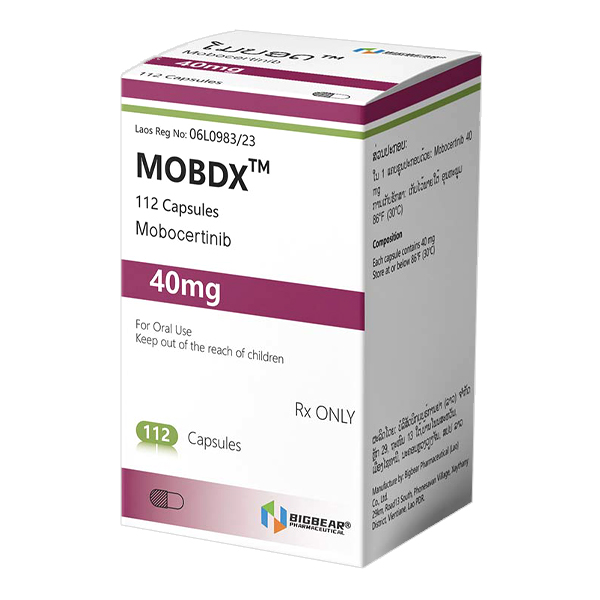
All Names: Exkivity、TAK-788、mobocertinib、莫博替尼、琥珀酸莫博赛替尼胶囊、安卫力
Indications:Local advanced or metastatic non-small cell lung cancer (NSCLC) adult patients with epidermal growth factor receptor (EGFR) exon 20 insertion mutation
Manufacturer:Daxiong
Customs Clearance Procedure:If the customs requires the package for customs clearance, please pay the customs clearance fee according to the content of EMS SMS and customs regulations.
Mobocetinib is an oral epidermal growth factor receptor (EGFR) tyrosine kinase inhibitor.
1、 Drug name
1. Chinese name: Mobutinib
2. English name: mobocortinib
3. Product Name: EXKIVITY
2、 Indications
1. Used to treat adult patients with locally advanced or metastatic non-small cell lung cancer (NSCLC) diagnosed with epidermal growth factor receptor (EGFR) exon 20 insertion mutation using FDA approved testing methods.
2. Suitable for patients with disease progression after platinum based chemotherapy.
3、 Specifications and characteristics
Capsule formulation, each containing 40mg of Mobotinib (equivalent to 48.06mg of Mobotinib succinate).
4、 Main components
1. Active ingredient: Mobutinib succinate
2. Accessories: The capsule shell contains gelatin and titanium dioxide, and the printing ink contains insect glue, alcohol, etc.
5、 Usage and dosage
1. Recommended dosage: 160mg orally, once daily, with meals or on an empty stomach.
2. Usage: Swallow the whole capsule, do not open, chew or dissolve the contents of the capsule.
3. Omission treatment: If not taken for more than 6 hours, skip the dose and take the medication according to the original plan the next day.
4. Vomiting treatment: If vomiting occurs after taking medication, there is no need to take it again. Continue taking the original dose the next day.
6、 Dose adjustment
1. QT interval prolongation: Suspend administration when the first appearance is ≥ 481ms, and resume at the original dose or reduced dose (120mg → 80mg); Permanently discontinue medication when relapse occurs or ≥ 501ms.
2. Interstitial lung disease: If suspected, medication will be temporarily suspended; if diagnosed, medication will be permanently discontinued.
3. Diarrhea: pause at or above level 2, reduce dosage after recovery; The first dose reduction at level 4 will result in permanent discontinuation of medication in case of recurrence.
4. Cardiac toxicity: Level 2 suspension, original dose or reduction after recovery; ≥ Level 3 permanent discontinuation of medication.
5. When used in combination with CYP3A inhibitors, the dosage must be halved (e.g. 160mg → 80mg).
7、 Medication precautions
1. Dietary impact: Food does not affect absorption, but avoid grapefruit/juice (which may increase blood drug concentration).
2. Monitoring requirements: Regular monitoring of electrocardiogram, electrolytes, cardiac function, and pulmonary symptoms is required before and during medication.
3. Contraceptive requirements: Women of childbearing age should use non hormonal contraception (drugs may affect the effectiveness of hormonal contraception), and use contraception within one month (for women)/one week (for men) during and after discontinuation of medication.
8、 Medication for special populations
1. Liver/kidney dysfunction: Mild to moderate without adjustment, severe without clear recommended dosage.
2. Elderly: Patients over 65 years old have a higher incidence of adverse reactions and require close monitoring.
3. Pregnant women: Prohibited, may cause fetal damage.
4. Breastfeeding period: Breastfeeding is prohibited during the medication period and within one week of discontinuation.
9、 Adverse reactions
1. Common reactions (>20%): diarrhea (92%), rash (78%), nausea (37%), stomatitis (46%), vomiting (40%), decreased appetite (39%), paronychia (39%), fatigue (29%), dry skin (32%), musculoskeletal pain (34%).
2. Serious reactions: QT interval prolongation (1.2%>500ms), interstitial lung disease (4.3%), heart failure (2.7%), severe diarrhea (20% grade 3).
10、 Contraindications
There are no absolute contraindications, but clinical studies on patients with QTc>470ms were not included.
11、 Drug interactions
1. CYP3A inhibitors: Avoid using strong/moderate inhibitors (such as itraconazole) in combination, otherwise reduce dosage and strengthen electrocardiogram monitoring.
2. CYP3A inducer: Avoid using strong/moderate inducers (such as rifampicin) in combination, as it may reduce efficacy.
3. QT prolongation medication: Avoid using amiodarone in combination to increase the risk of arrhythmia.
12、 Storage method
1. Store at room temperature (20 ° C-25 ° C), allowing for short-term storage at 15 ° C-30 ° C.
2. Keep dry and avoid light.
mobocertinibinformation