- All Drug Categories
- Home
- Anti-cancer Drugs
- Healthcare Products
- Medical Information
- Statement
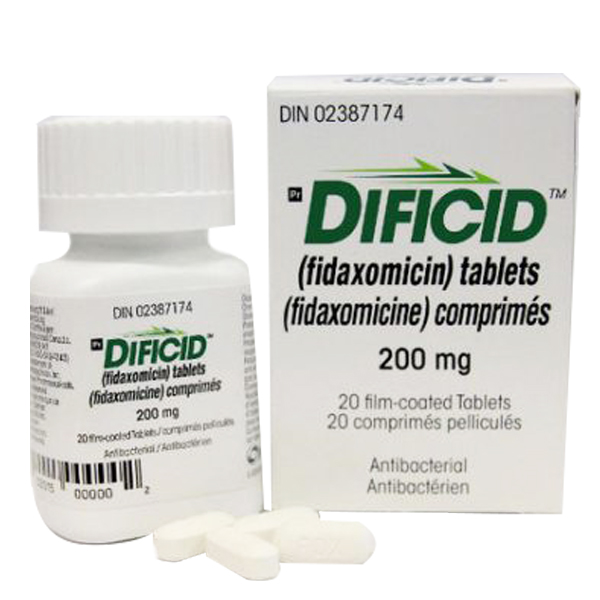
All Names: Dificid、fidaxomicin、Dificlir、非达霉素
Indications:Adults and children under 6 months to 18 years old, only used for confirmed or highly suspected infections caused by Clostridium difficile
Manufacturer:Astellas,Japan
Customs Clearance Procedure:If the customs requires the package for customs clearance, please pay the customs clearance fee according to the content of EMS SMS and customs regulations.
Fentanycin is a macrolide antibacterial drug that exerts bactericidal effects by inhibiting bacterial RNA polymerase.
1、 Drug name
1. Common name: Non fungicide
2. English name: Fidaxomicin
3. Product Name: DIFICID ®
2、 Indications
1. Used to treat Clostridium difficile associated diarrhea (CDAD) in children and adult patients aged 6 months and above.
To reduce the production of drug-resistant bacteria and maintain the effectiveness of DIFICID and other antibacterial drugs, DIFICID should only be used for the treatment of infections confirmed or strongly suspected to be caused by Clostridium difficile.
3、 Specifications and characteristics
Film coated tablets: 200mg
4、 Main components
1. Active ingredient: Non dauricin.
2. Tablet excipients include: hydroxytoluene, hydroxypropyl cellulose, lecithin (soybean), magnesium stearate, microcrystalline cellulose, polyethylene glycol, polyvinyl alcohol, pre gelatinized starch, sodium starch glycolate, talcum powder, and titanium dioxide.
5、 Usage and dosage
1. Administration route: Oral, can be taken with food or on an empty stomach.
2. Adults: 200mg (1 tablet) once, twice a day, for a course of 10 days.
3. Pediatric patients (6 months to<18 years old):
For those weighing ≥ 12.5kg and able to swallow tablets: 200mg (1 tablet) once, twice a day, for a course of 10 days.
6、 Dose adjustment
Specific dosage adjustment plan based on liver function, kidney function, or common adverse reactions. Elderly patients do not need to adjust their dosage.
7、 Medication precautions
1. Before and after meals: can be taken with food or on an empty stomach, and food has no clinical significance in affecting absorption.
2. Missed dose: The instructions do not clearly mention the treatment method for missed dose. It is recommended to follow the usual principles. If it is close to the next medication time, skip the missed dose and do not double the dosage.
3. Vomiting: Vomiting occurs after taking medication. It is not recommended to take additional medication and should wait until the next scheduled time to take the regular dose.
4. Only used for the treatment of Clostridium difficile infection, as it has minimal systemic absorption and is ineffective in treating other infections.
5. Complete the entire course of treatment, even if feeling better, to reduce the risk of recurrence and drug resistance.
8、 Medication for special populations
1. Pregnant women: The existing data is insufficient to assess drug-related risks. No evidence of fetal damage was found in animal experiments.
2. Breastfeeding period: No relevant data available, the benefits of breastfeeding and the clinical needs of the mother should be considered.
3. Children: Safety and efficacy have been established for patients aged 6 months and above. The safety and efficacy of patients under 6 months have not been established.
4. Elderly: No need to adjust dosage. Compared with young subjects, there was no overall difference in safety and efficacy, but the plasma concentration was higher and considered clinically insignificant.
5. Liver/kidney dysfunction: The impact on patients with liver dysfunction has not been evaluated, but the expected effect is not significant due to the lack of significant liver metabolism of amphotericin. Patients with renal insufficiency do not need to adjust the dosage.
9、 Adverse reactions
1. The most common adverse reactions in adults (with an incidence rate of ≥ 2%) include nausea, vomiting, abdominal pain, gastrointestinal bleeding, anemia, and neutropenia.
2. The most common adverse reactions (incidence ≥ 5%) in pediatric patients include fever, abdominal pain, vomiting, diarrhea, constipation, elevated transaminase levels, and rash.
3. Adverse reactions reported after listing: hypersensitivity reactions (dyspnea, angioedema, rash, itching).
10、 Contraindications
It is contraindicated for patients with known hypersensitivity reactions to any component of non dauricin or DIFICID.
11、 Drug interactions
1. Cyclosporine (P-gp inhibitor) significantly increases the plasma concentrations of non dauricin and its main metabolite OP-1118, but still remains at the ng/mL level. Based on clinical trial results, it can be used in combination without adjusting the dosage.
2. Fentanycin has no significant effect on the pharmacokinetics of digoxin (P-gp substrate), midazolam (CYP3A4 substrate), warfarin (CYP2C9 substrate), and omeprazole (CYP2C19 substrate). Co administration with P-gp or CYP enzyme substrates does not require dose adjustment.
12、 Storage method
Tablets: Store at room temperature of 20 ° C-25 ° C (68 ° F-77 ° F) and allow short-term storage between 15 ° C-30 ° C (59 ° F-86 ° F). Store in the original bottle.
Dificidinformation