- All Drug Categories
- Home
- Anti-cancer Drugs
- Healthcare Products
- Medical Information
- Statement
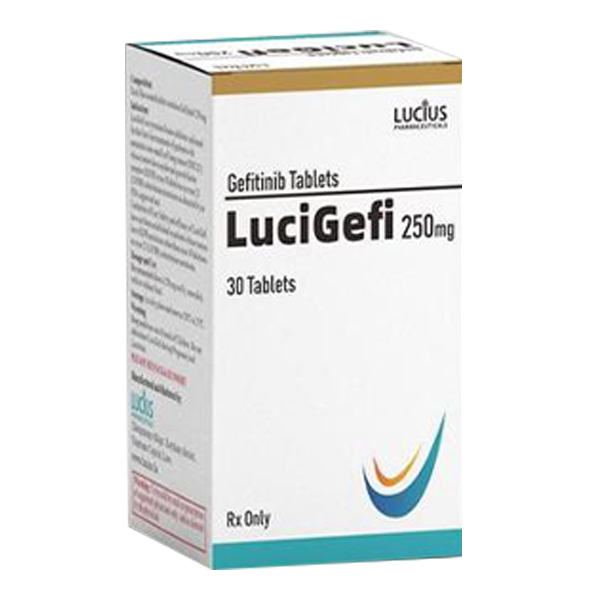
All Names: Gefitinib、Iressa、吉非替尼片、吉非替尼、易瑞沙、伊瑞可
Indications:Suitable for patients with metastatic non-small cell lung cancer (NSCLC) who have been confirmed by FDA approved testing methods to have epidermal growth factor receptor (EGFR) exon19 deletion or exon21 (L858R) replacement mutation in their tumors and require first-line treatment.
Manufacturer:LUCIUS PHARMACEUTICAL (LAOS) CO., LTD
Customs Clearance Procedure:If the customs requires the package for customs clearance, please pay the customs clearance fee according to the content of EMS SMS and customs regulations.
Gefitinib is an epidermal growth factor receptor tyrosine kinase inhibitor (EGFR-TKI) that selectively inhibits the tyrosine kinase activity of EGFR, blocking signaling pathways related to tumor cell proliferation, survival, and metastasis
1、 Drug name
Common name: Gefitinib
2、 Indications
Used to treat locally advanced or metastatic non-small cell lung cancer (NSCLC) patients with EGFR gene sensitive mutations.
3、 Specifications and characteristics
1. Tablets: 250mg/tablet (calculated as gefitinib)
2. Appearance: Thin film coated sheet.
4、 Main components
1. Active ingredient: gefitinib (epidermal growth factor receptor tyrosine kinase inhibitor)
2. Accessories: lactose, microcrystalline cellulose, cross-linked carboxymethyl cellulose sodium, polyvinylpyrrolidone, sodium dodecyl sulfate, magnesium stearate (core); Hydroxypropyl methylcellulose, polyethylene glycol, titanium dioxide, iron oxide red (coating).
5、 Usage and dosage
1. Recommended dose: 250mg (1 tablet) once daily, taken on an empty stomach or with food.
2. Omission treatment: If the missed dose exceeds 12 hours, skip the daily dose and take the medication according to the original plan the next day.
3. Vomiting treatment: If vomiting occurs after taking medication, there is no need to take the next dose according to the original plan.
6、 Dose adjustment
1. Hepatotoxicity:
Level 3 ALT/AST elevation: Suspend medication until it returns to ≤ Level 1, then reduce to 125mg/day.
Grade 4 liver injury: permanent discontinuation of medication.
2. Interstitial lung disease (ILD): permanent discontinuation of medication after diagnosis.
7、 Medication precautions
1. Medication time: It is recommended to have a fixed daily medication time, either on an empty stomach or after a meal.
2. Gastric acid regulator:
Avoid using in combination with proton pump inhibitors (PPIs).
H2 receptor antagonists should be taken every 6 hours.
3. Drug interactions:
Avoid using potent CYP3A4 inducers (such as rifampicin) or inhibitors (such as ketoconazole) in combination.
Monitor the international normalized ratio (INR) of CYP2C9 substrates such as warfarin.
8、 Medication for special populations
1. Pregnant women: May cause fetal malformation, contraception is necessary during treatment and 2 weeks after the last dose.
2. Breastfeeding period: Breastfeeding is prohibited during the treatment period and within 2 weeks after the last dose.
3. Liver dysfunction: Close monitoring is required for moderate to severe liver injury.
4. Children: Safety and efficacy have not been established.
9、 Adverse reactions
1. Common (>20%): Diarrhea (48%), rash/acne (43%), nausea (13%), vomiting (12%), fatigue (11%).
2. Serious adverse reactions:
Interstitial lung disease (ILD, incidence about 1%)
Hepatotoxicity (approximately 10% with elevated ALT)
10、 Contraindications
1. It is contraindicated for individuals allergic to gefitinib or excipients.
2. Use with caution in patients with severe liver dysfunction.
11、 Drug interactions
1. CYP3A4 inducer/inhibitor: significantly affects the blood concentration of gefitinib.
2. Gastric acid inhibitor: PPI can reduce the absorption rate of gefitinib by 47%.
12、 Storage method
Store below 30 ° C and keep the original packaging moisture-proof.
Gefitinibinformation