- All Drug Categories
- Home
- Anti-cancer Drugs
- Healthcare Products
- Medical Information
- Statement
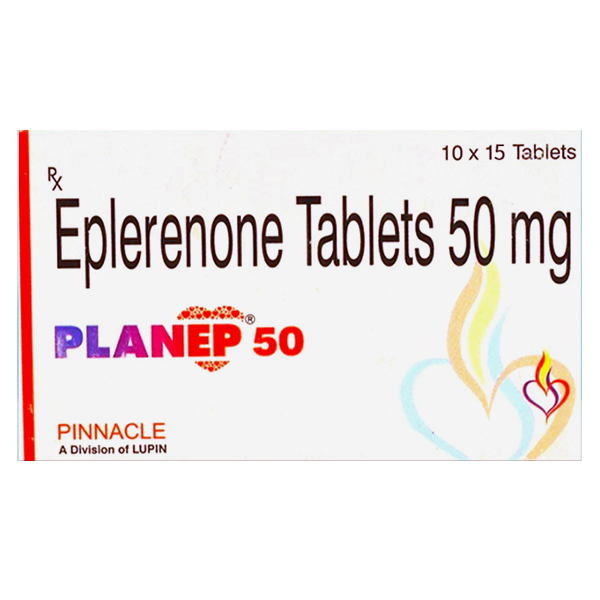
All Names: Inspra、Eplerenone、依普利酮
Indications:Adult patients with heart failure and hypertension after myocardial infarction.
Manufacturer:India LUPIN
Customs Clearance Procedure:If the customs requires the package for customs clearance, please pay the customs clearance fee according to the content of EMS SMS and customs regulations.
Eplerenone is a novel selective aldosterone receptor antagonist that reduces sodium reabsorption and potassium excretion by selectively blocking aldosterone receptors, thereby exerting a hypotensive and heart failure relieving effect.
1、 Drug name
1. Common name: Iprolidone
2. Product Name: INSPRA
3. Dosage form: Tablets
2、 Indications
1. Used to improve the survival rate of adult chronic heart failure patients with stable and symptomatic ejection fraction reduction (≤ 40%) after acute myocardial infarction.
2. Used for treating adult hypertension to lower blood pressure. Lowering blood pressure can lower the risk of fatal and non fatal cardiovascular events, primarily stroke and myocardial infarction.
3、 Specifications and characteristics
1. Specification: 50mg.
2. Appearance: Tablets.
4、 Main components
Active ingredient: Iprenone.
5、 Usage and dosage
1. Heart failure after myocardial infarction: The recommended starting dose is once daily, 25 milligrams per dose. Gradually increase to the recommended target dose once daily, 50 milligrams per dose, based on patient tolerance within 4 weeks.
2. Hypertension: The recommended starting dose is 50 milligrams once daily. If the blood pressure response is insufficient, it can be increased to 50 milligrams twice a day. We do not recommend using higher doses.
6、 Dose adjustment
1. All patients should regularly monitor their serum potassium levels before and during treatment.
2. Patients with heart failure after myocardial infarction need to adjust the dose according to serum potassium levels: if serum potassium is below 5.0mEq/L, an increase in dose may be considered; No adjustment is required between 5.0-5.4mEq/L; Reduce the dosage or switch to taking the medication every other day between 5.5-5.9mEq/L; If the potassium level reaches or exceeds 6.0mEq/L, the administration should be suspended. After the potassium level drops below 5.5mEq/L, it should be restarted every other day at a dose of 25mg.
3. When used in combination with moderate CYP3A inhibitors, the dose for heart failure patients after myocardial infarction should not exceed 25 milligrams once daily; The initial dose for hypertensive patients is 25 milligrams once daily. If there is insufficient blood pressure response, the maximum dose can be increased to 25 milligrams twice daily.
7、 Medication precautions
1. Medication time: Absorption is not affected by food, and can be taken before or after meals.
2. Omission: Not specified, please follow the doctor's advice. Usually, if it is close to the next medication time, skip the missed dose and do not double the dosage.
3. Vomiting: unspecified, consult a doctor if this condition occurs.
4. Monitoring: Serum potassium and renal function should be regularly monitored before treatment, within the first week of treatment, one month after dose adjustment, and thereafter.
5. Patients should avoid using potassium supplements or potassium containing salt substitutes without consulting a doctor. If you experience dizziness, diarrhea, vomiting, rapid or irregular heartbeat, lower limb edema, or difficulty breathing, you should contact a doctor.
8、 Medication for special populations
1. Elderly patients: Elderly patients (especially those aged ≥ 75) have not shown clear benefits in heart failure studies after myocardial infarction. Due to age-related decline in kidney function and increased risk of hyperkalemia, close monitoring is necessary.
2. Pregnant women: Due to limited usage data during pregnancy, it is important to weigh the pros and cons.
3. Breastfeeding period: It is not yet clear whether eplerenone is secreted with human milk, and lactating women should use it with caution.
4. Men and women of childbearing age: Based on animal data, it may impair male fertility.
5. Children: The safety and effectiveness of treating hypertension have not yet been established. The safety and efficacy of pediatric medication for treating heart failure have not been established.
6. Patients with renal insufficiency: They are a high-risk population for hyperkalemia and have relevant contraindications (see contraindications). They should be used with caution and closely monitored.
7. Patients with liver dysfunction: Patients with moderate liver dysfunction have increased exposure and should be cautious.
9、 Adverse reactions
1. Heart failure after myocardial infarction: The most common adverse reactions (incidence>2% and higher than placebo) are hyperkalemia and elevated serum creatinine.
2. Hypertension: Adverse reactions are not common in clinical studies. Reported vascular edema and rash after listing.
3. Other: There have been reports of male breast development and abnormal vaginal bleeding.
10、 Contraindications
1. All patients: serum potassium concentration above 5.5mEq/L at the beginning of treatment; Creatinine clearance rate is less than or equal to 30 milliliters per minute; Simultaneously using potent CYP3A inhibitors.
2. Additional contraindication for hypertensive patients: type 2 diabetes with microalbuminuria; Male serum creatinine is higher than 2.0 mg/dL or female serum creatinine is higher than 1.8 mg/dL; Creatinine clearance rate is less than 50 milliliters per minute; Simultaneously use potassium supplements or potassium sparing diuretics.
11、 Drug interactions
1. Do not use in combination with potent CYP3A inhibitors.
2. When used in combination with moderate CYP3A inhibitors, the dosage needs to be adjusted.
3. Co administration with angiotensin-converting enzyme inhibitors or angiotensin II receptor antagonists increases the risk of hyperkalemia and requires close monitoring.
4. Co use with lithium salts may increase the risk of lithium poisoning and requires frequent monitoring of blood lithium levels.
5. The combination with nonsteroidal anti-inflammatory drugs may weaken the antihypertensive effect and lead to hyperkalemia, especially in patients with renal insufficiency, who need to monitor blood pressure and blood potassium.
12、 Storage method
Store at 25 ° C and allow for variation between 15-30 ° C.
Eplerenoneinformation