- All Drug Categories
- Home
- Anti-cancer Drugs
- Healthcare Products
- Medical Information
- Statement
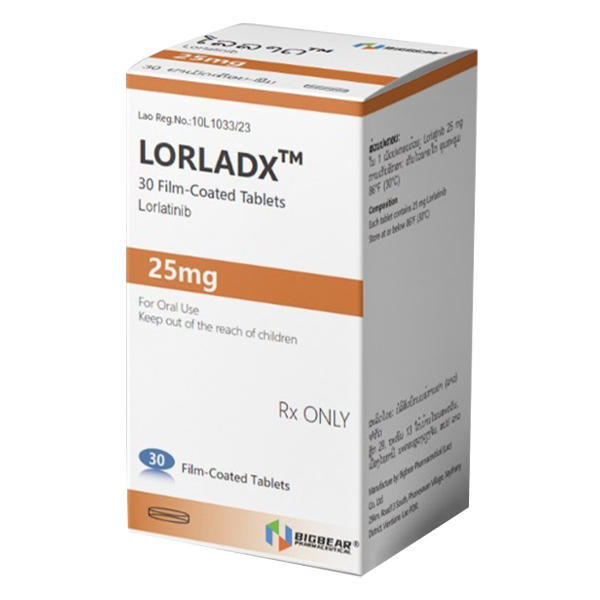
All Names: Lorlatinib、Lorbrena、洛拉替尼、劳拉替尼、博瑞纳
Indications:Adult patients with metastatic non-small cell lung cancer
Manufacturer:Daxiong
Customs Clearance Procedure:If the customs requires the package for customs clearance, please pay the customs clearance fee according to the content of EMS SMS and customs regulations.
Lorlatinib is a third-generation inhibitor of anaplastic lymphoma kinase (ALK) and ROS1 tyrosine kinase, which significantly inhibits various ALK resistant mutations (such as G1202R, I1171T, etc.) and can penetrate the blood-brain barrier, effectively controlling central nervous system metastases.
1、 Drug name
1. Common name: Lorlatinib
2. Product Name: LORBRENA ®
2、 Indications
Loratinib is suitable for the treatment of metastatic non-small cell lung cancer (NSCLC) patients with anaplastic lymphoma kinase (ALK) positivity, whose disease progresses in the following situations:
1. Previously received treatment with crizotinib and at least one other ALK inhibitor;
2. Or have previously received alectinib as the first ALK inhibitor treatment;
3. Or have previously received celetinib as the first ALK inhibitor treatment.
This indication has been granted accelerated approval based on tumor response rate and duration of response, and subsequent confirmatory clinical trials may be needed to validate its clinical efficacy.
3、 Specifications and characteristics
Loratinib tablets come in two specifications:
1. 25mg: film coated tablets
2. 100mg: film coated tablets
4、 Main components
1. Each tablet contains 25mg or 100mg of lorlatinib.
2. Accessories include microcrystalline cellulose, anhydrous calcium hydrogen phosphate, hydroxypropyl starch, magnesium stearate, etc.
3. The film coating contains: hydroxypropyl methylcellulose, lactose, polyethylene glycol 3350, triacetin glycerol ester, titanium dioxide, iron oxide, etc.
5、 Usage and dosage
1. The recommended dosage is 100mg orally once daily, which can be taken with food or on an empty stomach;
2. Should be swallowed whole, not chewed, crushed or divided;
3. Take medication at roughly the same time every day. If missed and more than 4 hours before the next dose, you can take it again. Otherwise, skip it;
4. If vomiting occurs after taking medication, do not take the next dose as planned.
6、 Dose adjustment
Adjust the dosage according to the severity of adverse reactions:
1. First reduction: 75mg once daily;
2. Second dose reduction: 50mg once daily;
3. If 50mg is still intolerable, the medication will be permanently discontinued.
The specific adjustment criteria include the severity of adverse reactions such as central nervous system reactions, hyperlipidemia, atrioventricular block, and interstitial lung disease.
7、 Medication precautions
1. Avoid co administration with potent CYP3A inducers as it may lead to severe liver toxicity;
2. During medication, central nervous system symptoms (such as cognitive impairment, emotional changes, hallucinations, epilepsy, etc.) may occur and require close monitoring;
3. Regularly check blood lipid levels and use or adjust lipid-lowering drugs if necessary;
4. Monitor electrocardiogram and pay attention to the risk of atrioventricular block;
5. Attention should be paid to interstitial lung disease/pneumonia when respiratory symptoms occur, and medication should be stopped immediately and evaluated;
6. Men and women of childbearing age should take effective non hormonal contraceptive measures, as this product may render hormonal contraceptives ineffective.
8、 Medication for special populations
1. Pregnant women: May cause fetal damage, confirm non pregnancy before medication;
2. Breastfeeding period: Breastfeeding is prohibited during the medication period and within 7 days after the last dose;
3. Elderly individuals: limited data shows no significant difference compared to younger patients;
4. Liver and kidney dysfunction: Mild to moderate liver and kidney dysfunction does not require dose adjustment, while severe cases have insufficient medication data.
9、 Adverse reactions
Common adverse reactions (incidence ≥ 20%) include edema, peripheral neuropathy, cognitive impairment, dyspnea, fatigue, weight gain, joint pain, emotional changes, diarrhea, etc.
Laboratory abnormalities include hypercholesterolemia, hypertriglyceridemia, anemia, hyperglycemia, elevated transaminase levels, etc.
10、 Contraindications
Do not use in combination with potent CYP3A inducers.
11、 Drug interactions
1. Avoid co administration with intermediate acting CYP3A inducers;
2. Avoid co administration with potent CYP3A inhibitors. If co administration is necessary, adjust the dose of lorlatinib;
3. Avoid co administration with CYP3A substrate drugs as it may reduce their efficacy.
12、 Storage method
Stored at 20 ° C to 25 ° C (68 ° F to 77 ° F), short-term storage between 15 ° C to 30 ° C (59 ° F to 86 ° F) is allowed.
Lorlatinibinformation